


 Русский
- The Legacy of GOST: Why 2PM & PC Circular Connector Standards Still Matter Today
- Technical Breakdown of the 2PM Series: The Industrial Workhorse
- The PC Series: Evolution Towards Compactness and Hermeticity
- Comparative Analysis: 2PM vs. PC Connector Compatibility
- Key Technical Parameters for Modern Procurement (Shell, Contacts, and Plating)
- Application Scenarios: From Aerospace to Heavy Industrial Automation
- Contact Our Engineering Team
The Legacy of GOST: Why 2PM & PC Circular Connector Standards Still Matter Today
The landscape of industrial interconnect technology is often dominated by Western MIL-DTL specifications. However, the legacy of engineering—governed by the GOST (State Union Standard) system—remains a critical pillar for global infrastructure. These standards were developed to ensure extreme ruggedness and interchangeability across vast geographical territories and harsh environmental conditions, ranging from the Siberian Arctic to high-altitude aerospace missions.
For modern engineers and procurement specialists, understanding Legacy circular connector standards is not merely a historical exercise. These components, particularly the 2PM and PC series, continue to be the “gold standard” for maintenance, repair, and overhaul (MRO) in energy sectors, heavy rail, and aerospace systems across Eastern Europe and Central Asia. Their design philosophy emphasizes mechanical simplicity and high current-carrying capacity, making them an enduring choice for applications where failure is not an option.
Technical Breakdown of the 2PM Series: The Industrial Workhorse
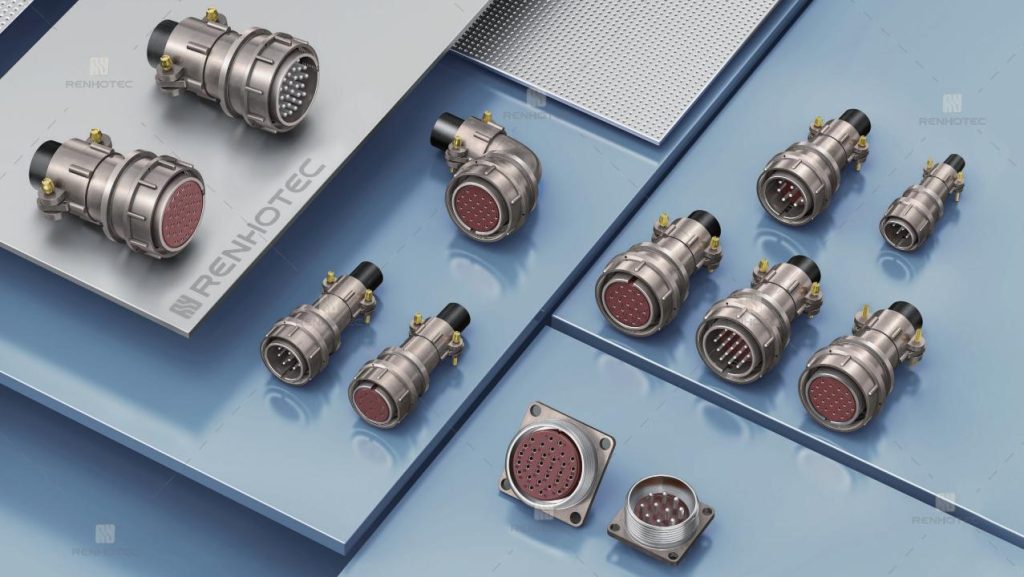
The 2PM series represents the foundational architecture of legacy rugged industrial connectivity. Designed as a general-purpose, non-hermetic circular connector, its primary strength lies in its modularity and robust threaded coupling mechanism. Unlike many modern plastic-shell connectors, the 2PM utilizes a high-strength aluminum alloy shell with an olive-drab or nickel plating, providing inherent electromagnetic shielding capabilities.
Key technical specifications that define the 2PM connector performance include:
- Threaded Coupling: A secure screw-on mechanism that prevents accidental disconnection under high-vibration loads (up to 100g).
- Shell Sizes: Available in standard circular connector shell sizes ranging from size 14 to 42, accommodating various contact densities.
- Contact Arrangement: Supports anywhere from 2 to 50 contacts, with rated currents typically reaching up to 15A or 35A per contact depending on the gauge.
- Operating Temperature: Engineered to function reliably between -60°C and +100°C.
The reason this series remains so prevalent in industrial threaded connectors is its “over-engineered” nature. The 2PM series was built with generous safety margins in dielectric withstanding voltage (up to 700V AC), which is critical for aging power distribution systems where voltage spikes are common.
The PC Series: Evolution Towards Compactness and Hermeticity
As electronic systems in the mid-to-late 20th century became more sophisticated, the bulky 2PM series reached its physical limits in aerospace and marine applications. This led to the development of the PC series. While the 2PM was the “utility truck” of connectors, the PC series was designed as the “precision instrument.”
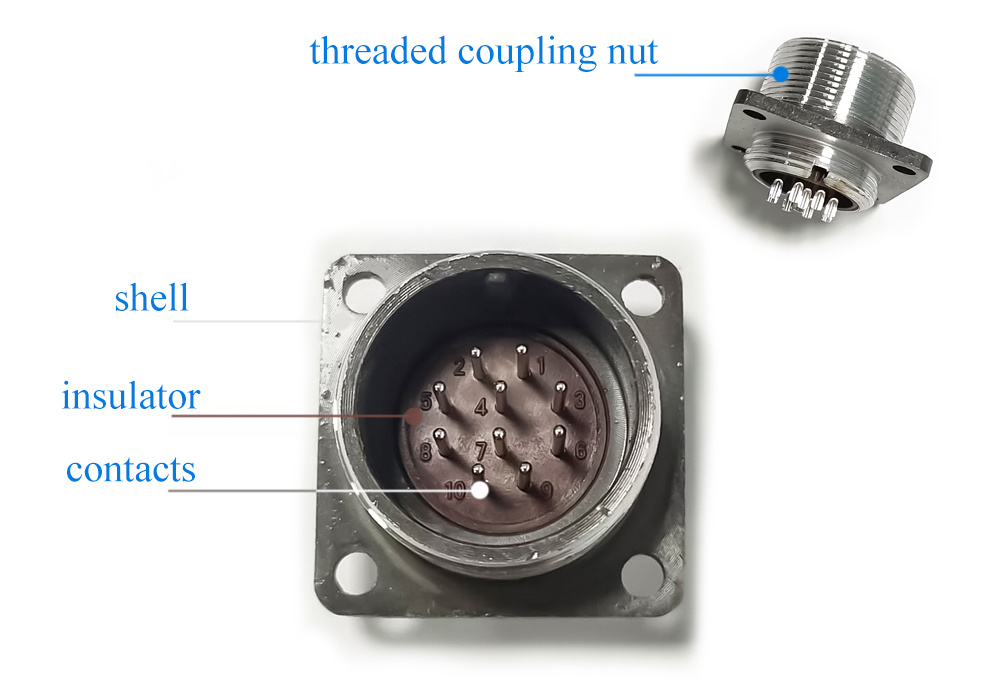
The primary shift in the PC series circular connectors was toward higher contact density and improved sealing. Unlike the standard 2PM, the PC series (specifically the PCB/PCG sub-variants) introduced hermetic sealing (glass-to-metal), allowing for reliable operation in vacuum environments or pressurized cabins.
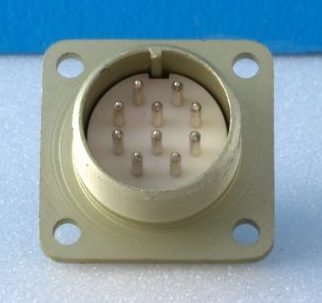
- Miniaturization: PC connectors utilize smaller shell sizes (starting from size 4) compared to the 2PM, saving critical PCB and panel real estate.
- Bayonet vs. Threaded: While some PC variants retained threads, many adopted a quick-disconnect bayonet mechanism to reduce maintenance time in tight spaces.
- Gold-Plated Contacts: To ensure low contact resistance in low-voltage signal transmission (often <5V), the PC series frequently utilizes gold plating (0.5μm to 1.2μm thickness) to prevent oxidation.
Comparative Analysis: 2PM vs. PC Connector Compatibility
One of the most frequent questions from procurement teams is: “Can I use a PC connector to replace a 2PM?” Technically, they are not directly mateable. The thread pitches and keyway alignments differ significantly to prevent accidental cross-mating of high-power (2PM) and low-signal (PC) lines.
The following table outlines the critical differences for connector cross-reference:
| Technical Feature | 2PM Series | PC Series | Engineering Impact |
|---|---|---|---|
| Coupling Type | Threaded (Screw) | Threaded or Bayonet | Vibration resistance vs. speed |
| Max Current | Up to 35A | Up to 4A – 5A | Power vs. Signal focus |
| Hermeticity | Non-Hermetic | Hermetic Options (PCB/PCG) | Vacuum & Pressure suitability |
| Contact Density | Low to Medium | High Density | Space-saving I/O |
| Standard Shells | 14, 18, 22, 24, 27+ | 4, 7, 10, 12, 14, 18 | Panel cutout dimensions |
Engineering Insight: When selecting between these for a new project, prioritize the 2PM series if your cable assembly requires heavy-gauge wire (>1.5mm²). Choose the PC series if you are dealing with multi-core sensor data where space is at a premium.
Key Technical Parameters for Modern Procurement (Shell, Contacts, and Plating)
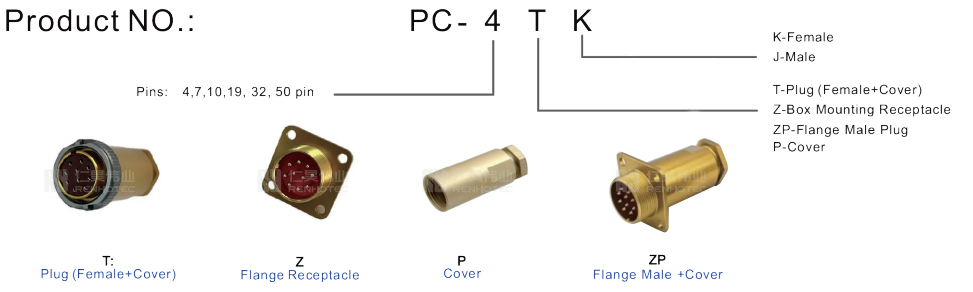
To successfully source or replace Legacy circular connector standards, one must decode the GOST part numbering system. Unlike Western part numbers, which often focus on shell style first, this legacy nomenclature is highly descriptive of the internal material and environmental capabilities.
Understanding the Part Numbering Logic
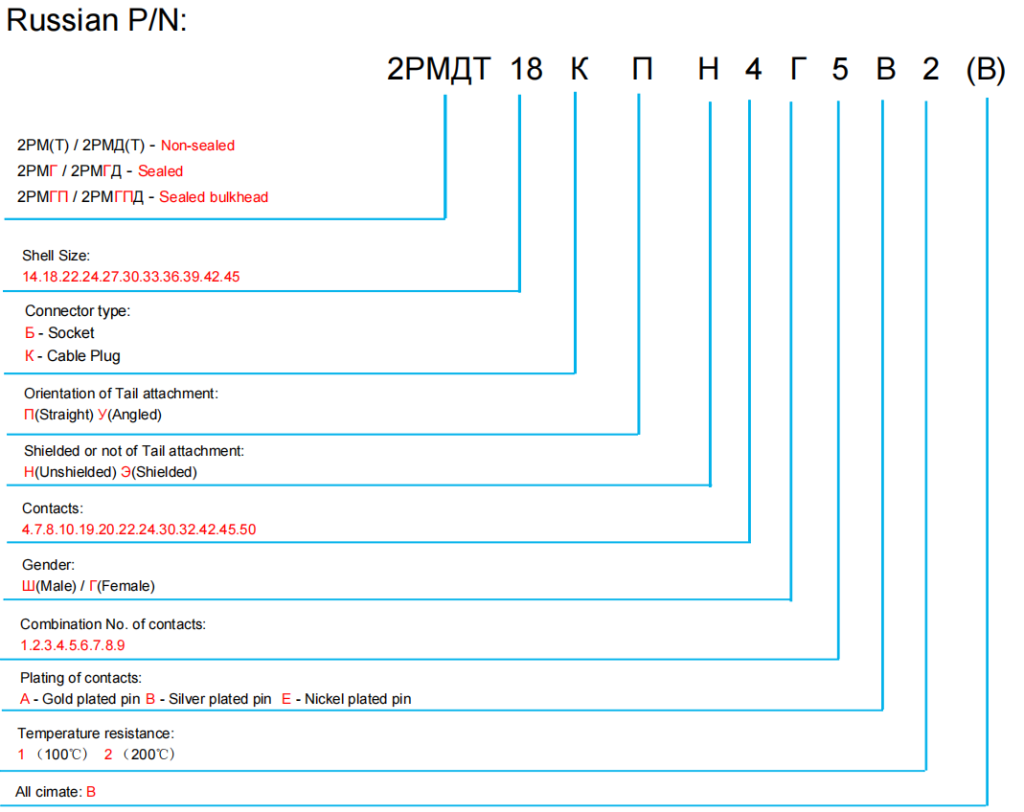
A typical part number like 2PM24B19G1V1 (2РМ24Б19Г1В1) tells a complete technical story:
- 2PM: Series type (General purpose).
- 24: Shell size (Outer diameter in mm).
- B: Shell type (B = Cable plug, K = Panel mount).
- 19: Number of contacts.
- G: Contact type (G = Socket/Female, Sh = Pin/Male).
- 1: Contact plating (1 = Silver, 2 = Gold).
- V (В): Climate version (V = All-climate/Tropicalized).
Material Science: Silver vs. Gold Plating
In the 2PM and PC series, the choice of plating is critical for long-term reliability.
Gold Plating (0.5μm – 1.2μm): Preferred for low-signal PC series connectors. Gold provides superior corrosion resistance, essential for millivolt sensor data in aerospace telemetry.
Silver Plating (2.5μm – 6μm): Standard for power applications. It offers the highest electrical conductivity but is prone to tarnishing in sulfur-rich environments.
Application Scenarios: From Aerospace to Heavy Industrial Automation
The endurance of Legacy circular connector standards is best seen in their diverse application range. These are not “legacy” parts; they are active components in high-stakes environments.
1. Aerospace and Defense Maintenance
Many satellites and regional aircraft (such as Antonov or Sukhoi models) rely on the PC series for flight control systems. Their ability to maintain a hermetic seal under rapid pressure changes makes them irreplaceable for cabin instrumentation.
2. Energy and Oil & Gas
In Siberian oil fields and Central Asian power grids, the 2PM series is favored for its “thick-skin” aluminum shell. Designed to withstand heavy mechanical impact and extreme thermal shock down to -60°C.
3. Industrial Automation and Robotics
Modern factories repurposing older established industrial machinery often integrate these connectors into new PLC systems. Their threaded coupling ensures that high-speed robotic vibrations do not lead to intermittent signal loss.
Common Questions About Established Industrial Connectors
1. Are 2PM and PC series connectors RoHS compliant?
2. Can a 2PM connector be intermated with a MIL-DTL-5015 connector?
3. What does the “V” (В) suffix mean in the part number?
4. Is the PC series better than the 2PM for high-frequency signals?
Contact Our Engineering Team
Finding the exact cross-reference for legacy connectors can be a technical challenge. Whether you are maintaining existing infrastructure or designing a ruggedized new system, our specialists Email: [email protected] can provide detailed drawings, 3D models, and competitive lead times for the 2PM and PC series.
OFFICIAL CATALOG
Explore 2PM Product Range
Browse our full inventory of 2PM series. Designed for high-reliability signal & power transmission.
- Compatible with Original Parts
- Z/M/C Socket Configurations Available
- Multiple Pin Layouts (4 – 32 Pins)
TECHNICAL SUPPORT
2PM Series Datasheets
Download detailed technical drawings, performance curves, and cross-reference tables for your engineering review.
- Threaded Coupling Mechanical Specs
- Shielded (A) vs Non-Shielded (B) Data
- Application-Specific Guidelines
OFFICIAL CATALOG
Explore PC Product Range
GOST-standard PC Series circular connectors catalog for high-reliability industrial and defense applications.
- Full GOST Standard Compatibility
- High-Density Connection Design
- Industrial-Grade Durability
TECHNICAL SUPPORT
PC Series Datasheets
Access the Renhotec PC Connectors datasheet for key specs on compact design, high-pin counts, and robust performance in industrial equipment.
- Advanced Shielding Capabilities
- Enhanced Environmental Sealing
- Interchangeable with Legacy Standards

Connectors & cable assemblies manufacturer.
Sharing insights on connectors and real-world applications.
Contact for datasheets, samples, or inquiries.