


 Русский
In the landscape of modern industrial automation and aerospace instrumentation, the demand for miniaturization has pushed interconnect technology to its physical limits. The OHS series (specifically designed as high-density ultra-small circular connectors) represents a critical solution for engineers balancing high-density pin counts with limited spatial footprints. However, the most pivotal decision in the design phase often comes down to the coupling mechanism: Bayonet vs. Threaded. Selecting the wrong interface can lead to catastrophic field failures, ranging from vibration-induced decoupling to extended maintenance downtime in mission-critical sensors.
The Technical Fundamentals: Understanding Bayonet and Threaded Coupling
To select the right interconnect solution, one must first grasp the mechanical physics of the interface. While the OHS series specializes in rapid bayonet locking—using a “push-and-turn” system with pins and J-slots—threaded counterparts (like the PC series) rely on a continuous helical ridge (screw thread). This threaded mechanism provides immense mechanical advantage, allowing the connector to compress internal interfacial seals for superior environmental protection. Furthermore, the fine-pitch threads ensure a secure, high-torque fit that resists loosening under static loads, making them ideal for high-pressure applications.
Conversely, Bayonet coupling utilizes a “push-and-turn” system, typically involving precision-machined pins on the receptacle that slide into ramped J-slots on the plug’s coupling ring. In the OHS bayonet design, a full mate is often achieved with just a 90° or 120° turn. This system relies on internal spring tension to “lock” the pins into a detent position, providing an audible and tactile “click” that confirms a secure connection. While it lacks the raw compressive force of a screw thread, its speed and vibration-resistant detent make it a favorite for rapid-deployment scenarios.
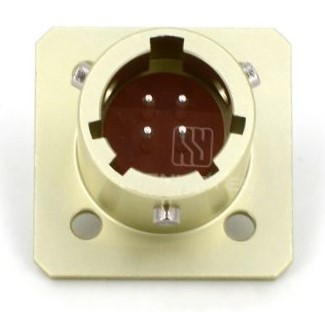
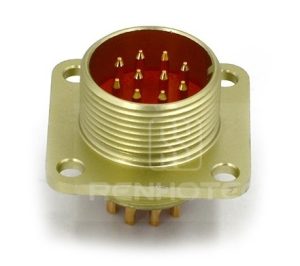
Key Mechanism Characteristics
- Threaded Engagement: Multi-turn rotation; high axial compression; ideal for permanent or semi-permanent installations.
- Bayonet Engagement: Quarter-turn (90°-120°) locking; spring-loaded detent; optimized for high-cycle mating applications.
- OHS Adaptation: Both mechanisms are miniaturized in the OHS series to fit shell sizes as small as 10mm, maintaining structural integrity despite the reduced wall thickness.
Why Size Matters: The Rise of Ultra-Small OHS Connectors in Modern Industry
In the current era of Industrial IoT (IIoT) and SWaP (Size, Weight, and Power) optimization, every millimeter on a PCB or bulkhead is valuable real estate. The OHS series—specifically models like the OHS10 and OHS14—is designed to provide a high-density interconnect solution where traditional MIL-spec connectors are simply too bulky.
These ultra-small circular connectors typically offer:
- Shell Diameters as small as 10mm: Allowing for high-density mounting in hand-held devices and compact sensor housings.
- Weight Reduction: Utilizing lightweight aluminum alloys with nickel or chrome plating to minimize the mechanical load on delicate enclosures.
- High Pin Density: Despite the “ultra-small” footprint, OHS series connectors can accommodate multiple contact pairs (from 4 to 10+ pins), enabling complex signal transmission in a footprint previously reserved for simple power leads.
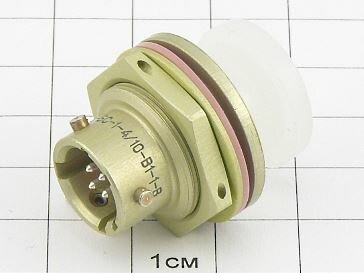
Head-to-Head Comparison: Bayonet (OHS) vs. Threaded (PC) Coupling
When selecting between these two for your compact industrial design, the trade-offs are specific to the operating environment. While both provide electrical continuity, their mechanical performance under stress differs significantly.
| Comparison Feature | Bayonet Coupling (e.g., OHS Series) | Threaded Coupling (e.g., PC Series) |
|---|---|---|
| Mating Speed | Fastest: 90° to 120° turn; ideal for rapid field swaps. | Slower: Requires multiple full rotations to seat. |
| Vibration Resistance | High: Uses a spring-loaded detent to “lock” pins into place. | Variable: May require safety wire or Loctite in high-vibration. |
| Environmental Sealing | IP54 / IP65: Compression is limited by internal spring tension. | Superior (IP67+): High torque ensures maximum O-ring compression. |
| Blind Mating | Excellent: Tactile “click” confirms full engagement. | Poor: Risk of cross-threading in dark or cramped spaces. |
| Mechanical Strength | Moderate; stress is concentrated on the locking pins. | Maximum: Threads distribute load across the entire shell. |
* Technical Note: To achieve a true IP67 immersion rating, the Threaded interface (like PC series) with a correctly seated interfacial seal is mandatory; the OHS Bayonet version typically provides IP54/65 splash protection.
When to Choose Bayonet Coupling (Quick-Disconnect)
For applications like portable diagnostic equipment or modular sensor arrays, the Bayonet-style OHS is the clear winner. The ability to swap out a sensor in seconds without tools—and receiving a physical “click” confirmation—significantly reduces the risk of improper mating through tactile and audible feedback in the field. This “Quick-Disconnect” feature is a major advantage for [Insert Link to Product Page] where uptime and serviceability are the primary KPIs.
When Mini-Threaded Connectors (PC Series) are Required
To achieve a true IP67 immersion rating, a threaded interface (like the PC series) with a correctly seated interfacial seal is mandatory; the OHS bayonet version typically provides IP54/65 splash protection.
Key Technical Characteristics of OHS Series Connectors
To ensure a design meets industrial or military-grade standards, engineers must look beyond the coupling mechanism and into the material science of the OHS series. Based on the technical catalog, these connectors are engineered for high-reliability signal and power transmission in miniaturized formats.
The OHS series typically features an aluminum alloy shell with high-grade plating (Nickel or Chrome), providing an optimal balance between weight and structural rigidity. The internal components are equally robust:
- Contact Resistance: ≤5 mΩ (for standard Φ1.0mm contacts), ensuring minimal signal loss.
- Insulation Resistance: ≥500MΩ under standard conditions, and still maintaining ≥20MΩ under high temperature/humidity.
- Dielectric Withstand Voltage: Capable of handling 500V to 800V AC (RMS) depending on the pin configuration.
- Durability (Mating Cycles): Designed for ≥ 500 cycles, which is significant for a connector of this scale. (Durability is contingent upon proper alignment during mating to prevent pin damage.)
- Operating Temperature: Wide range from -55℃ to +100℃, covering most industrial and outdoor environments.
Typical Applications for OHS Interconnects in Sensors and Instrumentation
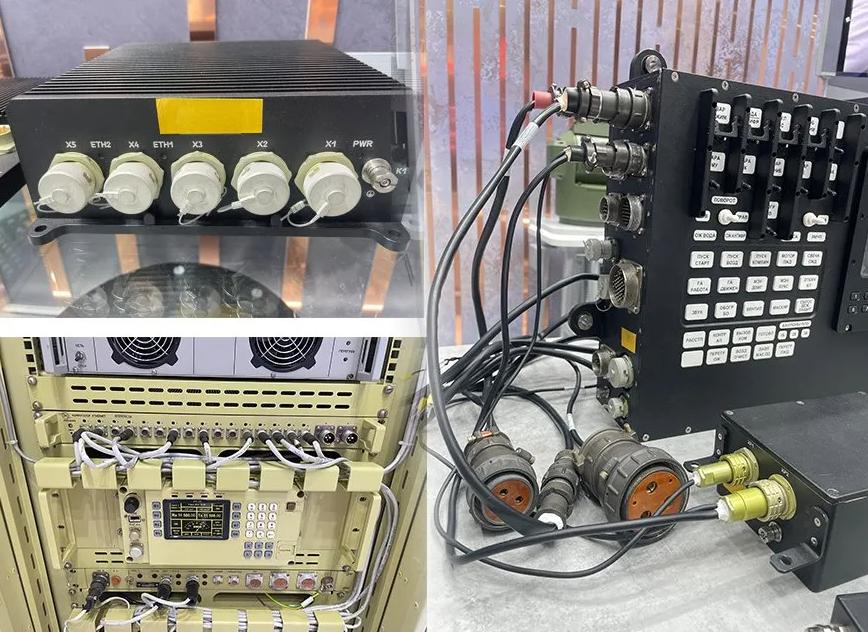
The OHS series is not just a general-purpose component; it is a specialized solution for “space-constrained” environments. We see these most frequently in the following sectors:
1. Industrial Automation & Robotics
In robotic “end-effectors” or grippers, space for cabling is nearly non-existent. The OHS10 Bayonet version allows for rapid tool changes, while its small diameter prevents interference with the robot’s range of motion.
2. Aerospace & UAV Systems
For Unmanned Aerial Vehicles (UAVs), weight is the enemy. The aluminum shell of the OHS series provides the EMI shielding of a metal connector at a fraction of the weight of standard stainless steel MIL-DTL series.
3. Medical Diagnostic Equipment
Handheld ultrasound probes and portable monitoring devices require connectors that are both aesthetically sleek and mechanically “idiot-proof.” The tactile feedback of the OHS Quick-Disconnect ensures medical staff can swap probes confidently without looking at the port.
4. Precision Sensors (Pressure/Flow/Temp)
For sensors mounted on vibrating machinery, the OHS Threaded variant is the preferred choice. It ensures that the constant micro-vibrations of a pump or motor do not lead to “intermittent contact” issues over years of service.
FAQ
The OHS series is designed based on the form factor of legacy ultra-small connectors (such as the OHS-BC series). While the shell sizes often match, we recommend verifying specific bayonet ramp angles if you are performing a direct field replacement. Please note that OHS utilizes a bayonet-style lock; for similar applications requiring a threaded interface, the PC (RS) series is the standard choice.
Generally, Threaded Coupling provides more consistent 360° metal-to-metal contact between the plug and receptacle due to the high torque applied. For high-frequency signal integrity in “noisy” industrial environments, the threaded interface is often the safer bet.
Gold-plating (typically 0.1μm to 0.75μm) is crucial. Because the contact pins are small (≤1.0mm), even minor oxidation can lead to significant signal drop. Gold ensures low contact resistance (≤5 mΩ) over the 500+ mating cycle lifespan.
Yes, but with a caveat. The OHS Bayonet uses a spring-loaded locking detent. While it resists loosening better than a loose thread, in extreme vibration scenarios, a threaded connector with a safety wire is still the industry standard for maximum security.
Contact US for Custom OHS Solutions
Selecting between Bayonet vs. Threaded for your OHS series interconnect is more than a preference—it’s a performance calculation. Whether you need the high-speed cycling of a bayonet or the environmental ruggedness of a thread, Renhotec provides the precision-engineered hardware to back your design.

Connectors & cable assemblies manufacturer.
Sharing insights on connectors and real-world applications.
Contact for datasheets, samples, or inquiries.